Future Homes Standard timeline
2019: Government launches its first consultation on the Future Homes Standard, initially targeting implementation from 2025.
December 2023 – March 2024: Technical consultation sets out detailed proposals for energy efficiency, heating and building performance requirements.
March 2026: Final Future Homes Standard regulations, Approved Documents and government consultation response are published.
March 24, 2027: Most new requirements will come into force. Projects submitted before this date may qualify for transitional arrangements.
September 24, 2027: Specified amendments affecting higher-risk building work will take effect.
March 24, 2028: Eligible transitional projects will need to have started construction to continue under the previous standards.
What are the main requirements of the Future Homes Standard?
The Future Homes Standard building regulations are designed around whole-building performance rather than prescribing one technology for every home. The government has amended Part L (the Building Regulations’ energy-efficiency and emissions requirements, and has added a new functional requirement) so that it addresses both energy conservation and greenhouse gas emissions and has added a new functional requirement, L3, which covers on-site renewable electricity generation for for new homes and residential buildings.
Distributed energy resources in United Kingdom
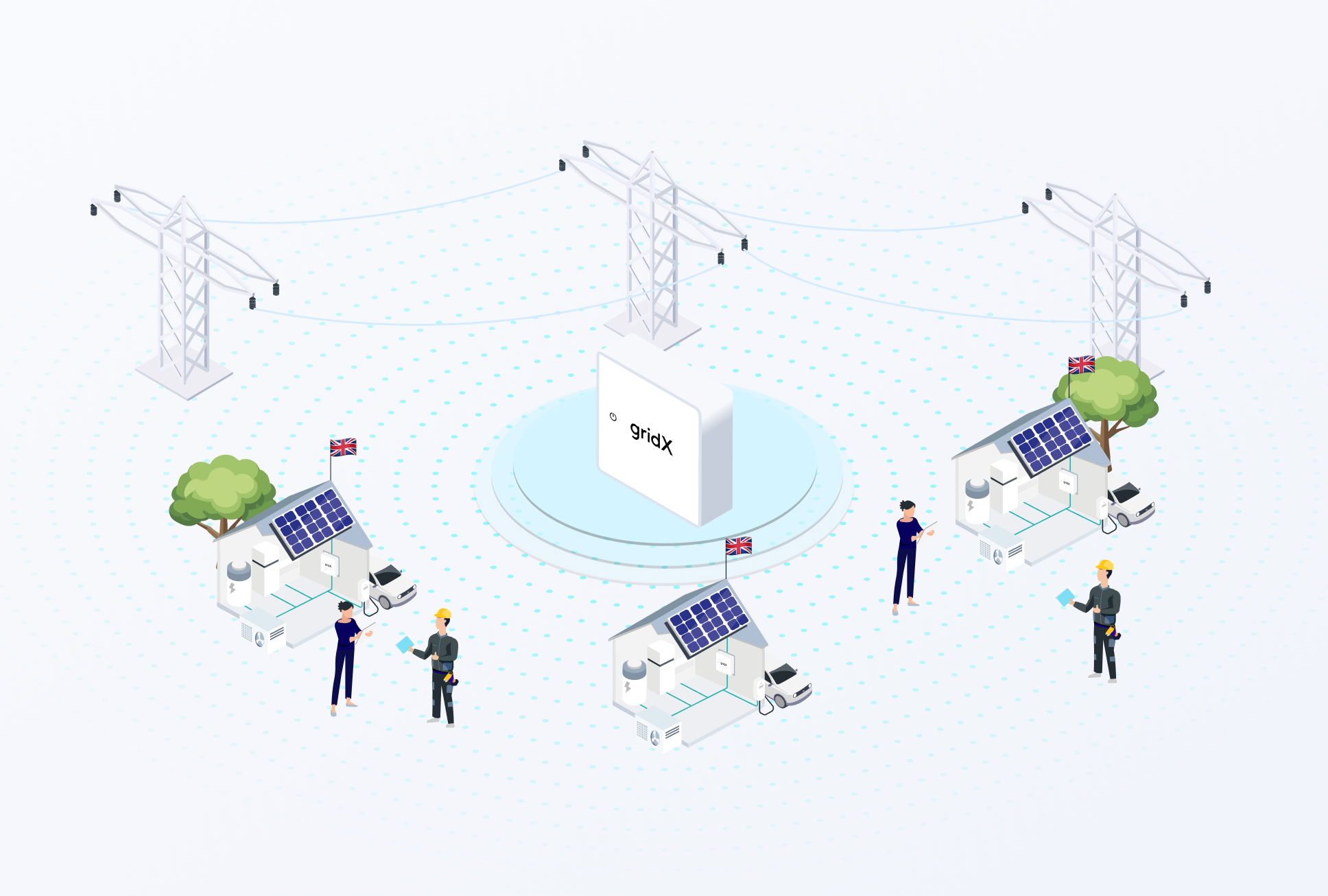
The Future Homes Standard arrives as distributed energy resources (DERs) are already scaling rapidly across the UK. The country passed 2 million solar PV installations in March 2026, while new-build heat pump installations increased 38% year on year in Q1 2026. At the same time, around 1.86 million zero-emission cars were licensed in the UK by the end of March 2026 and the number of MCS-certified battery storage installations surpassed 100,000 in July.
As more homes combine solar, heat pumps, EV charging and battery storage, the challenge shifts from simply installing low-carbon technologies to connecting and coordinating them.
While the FHS does not require a home energy management system, HEMS can provide the control layer that manages these assets as one system, optimizing household consumption, generation and storage while responding to electricity prices and grid signals.
Are heat pumps mandatory under the Future Homes Standard?
Not literally. The regulation remains performance-based rather than stating that every house must contain a particular type of heat pump. In practice, however, new homes must achieve the required performance using low-carbon heating. For example, a typical new-build semi-detached home would need an air-source heat pump or a connection to a heat network rather than a gas boiler to meet its carbon target. The government confirms heat pumps or heat networks can meet this requirement, but gas boilers will not.
Are solar panels mandatory under the Future Homes Standard?
The precise answer is more nuanced than “yes.” The regulations create a legal requirement, subject to limits on application, for renewable electricity generation when a new dwelling or building containing dwellings is erected. Solar PV is the principal compliance route. Government guidance considers the requirement met where solar panels equivalent to 40% of each dwelling’s ground-floor area are installed, but other methods can be used and lower PV coverage can be reasonable depending on the design and surroundings.
There are also explicit limits. Where the available roof space cannot reasonably generate 720 kWh a year, the guidance says it can be appropriate to install no solar PV. Certain relevant buildings with a storey at least 18 meters above ground are exempt from the new functional requirement. A directly connected renewable generation system outside the building’s curtilage can also satisfy specified circumstances. In other words, the policy is designed to put solar on the majority of new homes, not to require an identical PV array on every property regardless of technical feasibility.
Are smart meters mandatory in new homes?
Smart meters need another important qualification. The Future Homes package does not impose a mandatory smart-meter installation requirement. The Department for Energy Security and Net Zero instead published updated voluntary guidance so new buildings can be designed and constructed to be “smart-meter-ready” from the outset. That guidance is referenced by Approved Document L and applies across England, Scotland and Wales.
There has also been a change to the planned compliance methodology. The government intended the new Home Energy Model (HEM) to support the FHS, but its launch was delayed during final assurance.
As of August 2026, SAP 10.3 – the current version of the Standard Assessment Procedure used to calculate a home’s energy performance – is the sole approved compliance methodology available, with HEM expected to replace it later.
What does the Future Homes Standard mean for home electrification?

The strategic significance of the FHS extends beyond better insulation or replacing a boiler. It accelerates a shift toward homes containing multiple distributed energy resources (DERs) and controllable electrical loads.
A future new-build energy stack could increasingly look like:
Multi-asset homes: PV + heat pump + smart meter + EV/wallbox + battery
Not every element comes from the Future Homes Standard itself. FHS drives low-carbon heating and on-site renewable generation, while the accompanying voluntary guidance supports smart-meter-ready buildings. EV charging infrastructure is covered separately through Part S of England’s Building Regulations and batteries are not required by FHS.
The distinction is important because an electrified home is not automatically a flexible home. PV generation varies with weather and time of day. A heat pump creates a substantial electrical load with some potential to shift consumption. EV charging can create another large load and a battery can move energy between periods. Without coordination, these technologies simply operate alongside each other. With connectivity and smart energy management, they can be managed as one household energy system.
That matters increasingly in Great Britain’s wider electricity market. The government’s Clean Flexibility Roadmap explicitly links smart meters to flexible tariffs, smart EV charging and flexible heat-pump use. By mid-June 2026, more than 11.3 million smart meters had already been migrated to half-hourly settlement, with the national Market-wide Half-Hourly Settlement program intended to create stronger foundations for flexible retail products.
For energy companies, FHS therefore creates a larger potential installed base of electrically powered, data-producing and potentially controllable household assets. That is an energy flexibility opportunity, but only when the assets can actually communicate and be coordinated.
What opportunities does the Future Homes Standard create for energy companies?
Energy retailers and utilities
For energy retailers and utilities, the commercial opportunity is to move beyond supplying kilowatt-hours and establish a broader digital relationship with increasingly electrified households. A connected HEMS can potentially support dynamic tariff propositions, automated optimization and flexibility participation while reducing the need for customers to manually coordinate individual devices. The government is actively developing the wider Great Britain market around half-hourly settlement, flexible consumer tariffs and interoperable smart appliances.
Original equipment manufacturers (OEMs) and flexibility providers
Interoperability allows heat pumps, solar systems, EV chargers and batteries to become part of integrated home energy propositions rather than operate as isolated devices. For flexibility providers, a growing pool of connected assets also expands the potential for residential flexibility.
Homebuilders and property developers
FHS brings energy infrastructure decisions earlier into the development process. Designing homes with connectivity and future energy services in mind can make it easier to integrate and coordinate additional assets throughout the building's lifetime.
Installers
More electrified, multi-asset homes increase installation and commissioning complexity. Compatible, connected systems can simplify commissioning, reduce integration issues and provide a stronger foundation for adding or replacing energy assets over time.
The key point is that installing DERs creates potential value. Connecting and coordinating them is what makes that value actionable.
Expert insight: From efficient homes to flexible energy systems
The Future Homes Standard represents a significant shift in how new homes in England are designed. Higher energy efficiency requirements, low-carbon heating and greater renewable generation should reduce both household energy demand and operational carbon emissions. But the standard is ultimately a building regulation, not a blueprint for a flexible energy system.
That distinction matters. Installing a heat pump or solar PV does not automatically mean a home will use energy at the most efficient or valuable times. As EVs, batteries and other flexible assets are added, households increasingly become multi-asset energy systems with generation, consumption and storage all interacting behind a single grid connection.
This is where connectivity and home energy management become increasingly important. Connecting assets across different manufacturers allows a HEMS to coordinate how energy is generated, consumed and stored. That can help households increase solar self-consumption, shift demand to lower-cost periods and respond to dynamic tariffs while creating the technical foundation for wider flexibility services.
The FHS does not require HEMS or residential flexibility. Its primary role is to improve the energy performance of new homes and reduce their operational carbon emission. But it will accelerate the electrification of England's new housing stock at the same time that Great Britain's electricity market is moving toward half-hourly settlement, smarter tariffs and greater consumer-led flexibility. The opportunity is to ensure these two developments eventually work together.
As Carsten Schäfer, gridX’s Regulatory Affairs and Innovation Lead, succinctly said, “The Future Homes Standard is an important step toward more efficient, electrified homes. The next challenge is making sure the technologies within those homes do not operate in isolation. As more assets come behind the same grid connection, connectivity and intelligent energy management can help turn individual technologies into a coordinated system, creating value for households today while building the foundation for residential flexibility in the future.”