Intelligently distribute power among EV chargers, PV and BESS according to user, grid and market needs. Maximize value within existing grid limits, minimize fees and unlock new revenue streams.
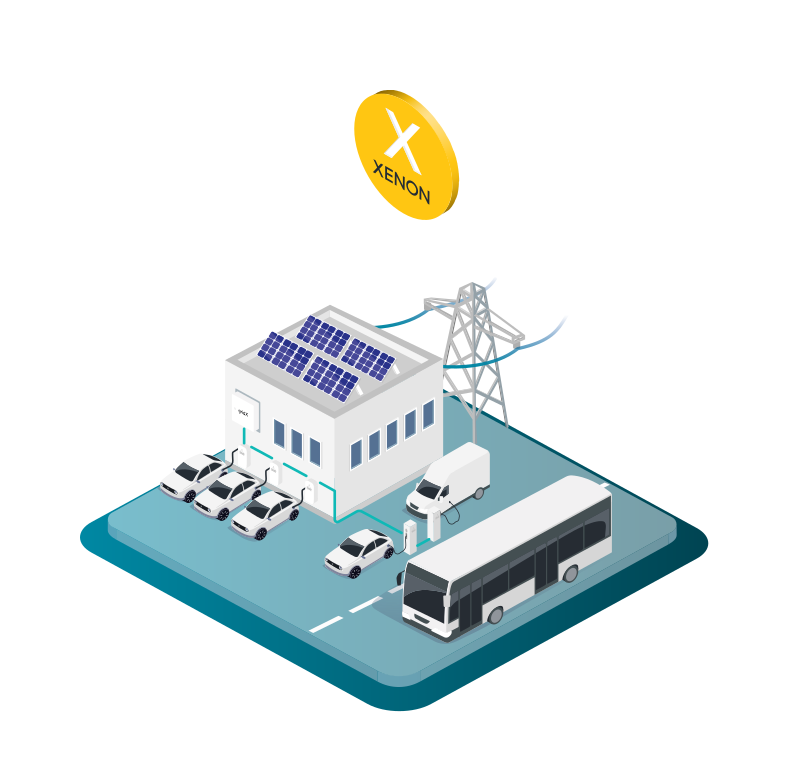





1. Everything starts with Connect
2. Save {{kpi:evci-grid-savings}} upfront per site in Germany with Control
3. {{kpi:evci-grid-fee-savings}}/site/year and –{{kpi:evci-cost-reduction}} energy cost with Optimize
4. New recurring revenue with Flex
That’s up to {{kpi:evci-charge-points}} more charge points on your existing grid connection, plus up to ~€16,000/year in operating savings per site.

Turn grid congestion and charging flexibility into recurring, high-margin revenue while gridX handles the rest. Start with Connect, add bundles as you scale across European markets and add new value-generating use cases.
Use the bundles you need for your own product or take our full solution to create the biggest value for your charging sites.
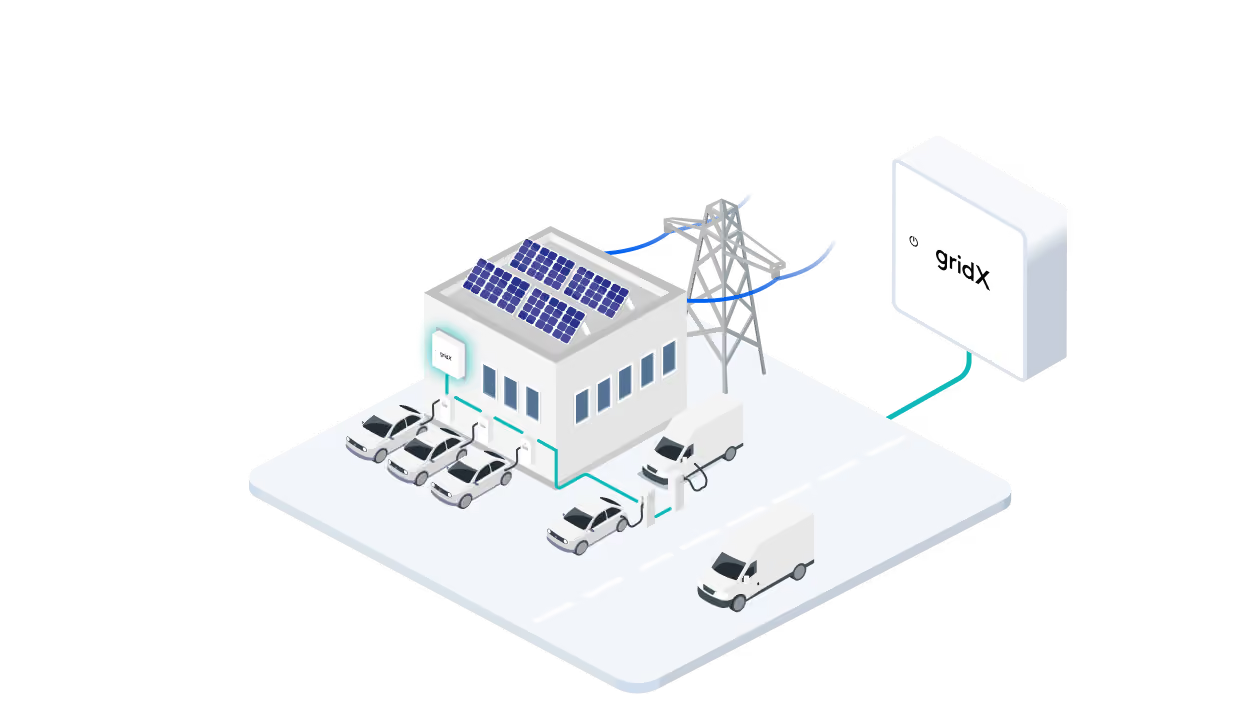
The foundation: locally connect {{kpi:evci-supported-devices}} devices from {{kpi:evci-supported-oems}} OEMs via the gridBox. Monitor charging sessions and resolve issues remotely with the Operator Dashboard. Enjoy wide interoperability with the market’s most in-demand assets and proven reliability: {{kpi:uptime-measured}} measured platform availability (H1 2026).
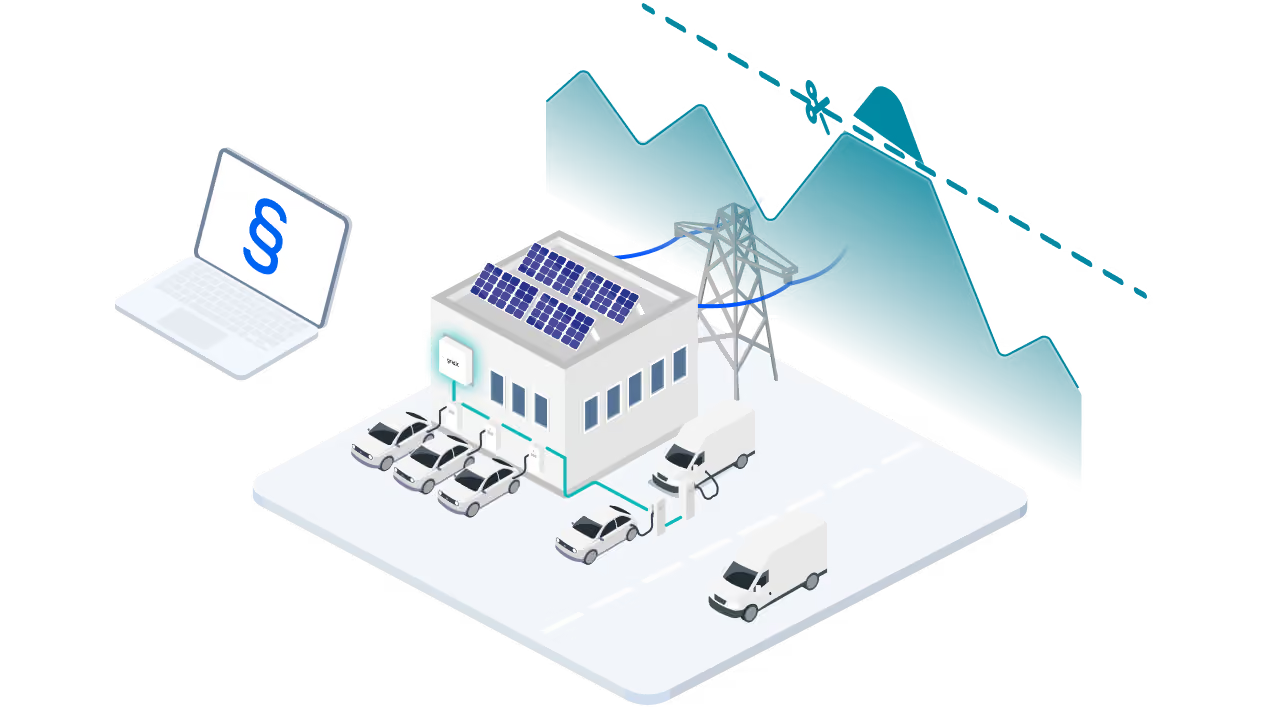
Everything you need to operate compliant and profitable charging sites: multi-fuse protection, real-time dynamic load management, peak shaving ({{kpi:evci-peak-shaving}}/year in operating savings) and mandatory compliance, such as G100.
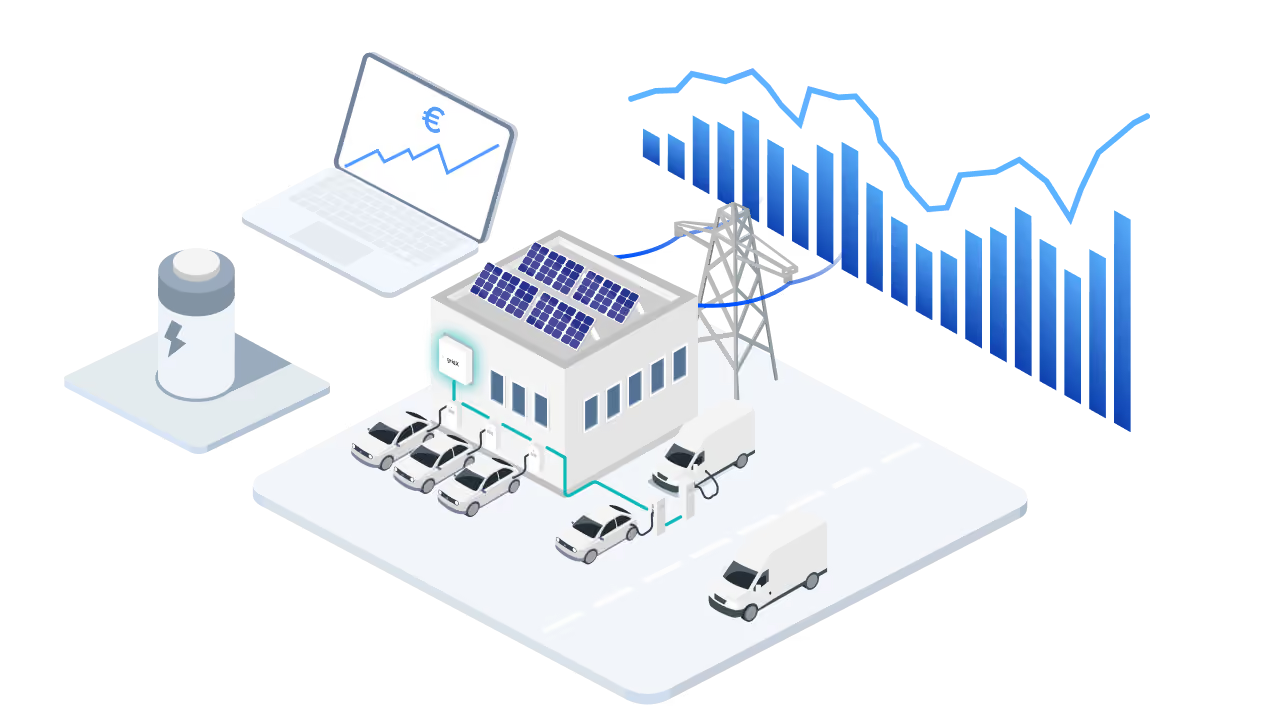
Reduce energy costs by up to {{kpi:evci-cost-reduction}} with dynamic tariff optimization, lower annual grid fees by up to {{kpi:evci-grid-fee-savings}} with DSO signaling (§14a) and virtually expand the grid by adding co-located PV and battery storage. All while ensuring a premium charging experience with user-based prioritization.
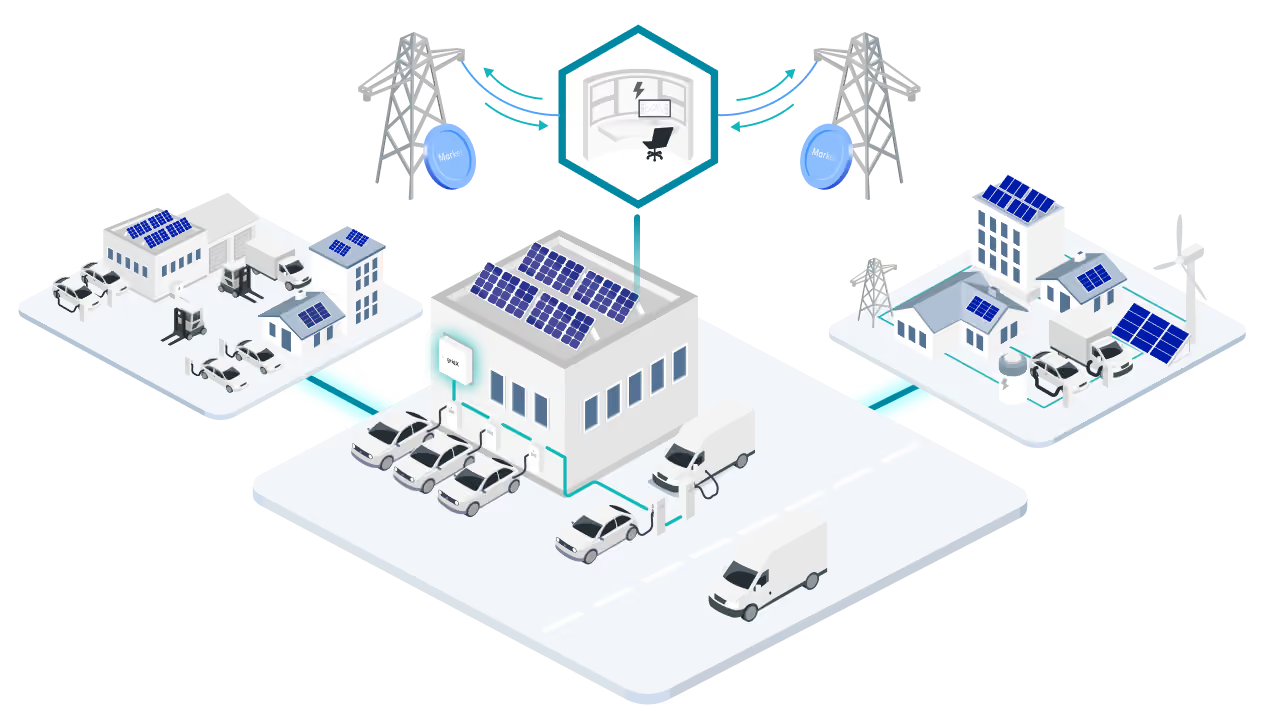
Open an entirely new profit center and grow recurring revenue per site. gridX enables you to trade your charging flexibility. Forecast available flex, pool it into a market-ready portfolio and trade it on the intraday, day-ahead and imbalance markets.




Avoid the six-figure cost of a new grid connection. Get the most out of the power you already have.
Slash your grid fees by staying below the peak demand threshold in every 15-minute billing period and integrating DSO signals. Minimize charging costs by charging when prices are low.
Maximize utilization of your existing connection. Power more vehicles on the same infrastructure.
Aggregate the flexibility of your chargers and make it available for trading: turn your fleet from an expense into a revenue driver.

Electrify your fleet without disruption and meet sustainability goals, while ensuring drivers can always get to where they need to go.


We support {{kpi:supported-oems}} OEMs and {{kpi:supported-devices}} energy assets. Our integrations focus on the most in-demand and future-proof devices in the field. As new assets are added each month, we maintain a live compatibility overview.
If a device you depend on isn’t yet supported, it may be on the roadmap. New integrations are scheduled against committed rollout volume, so let’s talk.
While developing certain energy management solutions in house is achievable, the ability to use multiple capabilities simultaneously, while guaranteeing stability and scalability is a resource-intensive process that no longer makes sense for your business.
To guarantee a fast, clean rollout, a consistently reliable customer experience across all sites and minimum operating costs, it makes more sense to work with experts. Only then can you stack use cases on top of each other and run peak shaving, dynamic load management, dynamic tariff optimization and virtual grid expansion at the same time. All while guaranteeing compliance to regulation, the strictest security principles and {{kpi:uptime-measured}} measured platform availability (H1 2026).
If you have already built a solution and scale is reaching an inflection point, XENON can integrate with what you have via API rather than replacing it.
Our pricing consists of three components: the platform, the number of assets connected and which value bundles they use, and the local gateway. The more you scale, the cheaper the price. Chat to our team about your requirements and scaling plans to get a clearer pricing overview for more transparency.
Platform fee:
This is a recurring subscription for connecting to the XENON platform and includes all connectivity, data analytics and control, support and the dashboard.
Asset fee: An asset is each individual connected, controllable device. On a charging site each charge point counts as one asset, alongside each battery or inverter. The asset fee is dependent on the bundles used: Control, Optimize and/or Flex.
gridBox fee: Price per edge gateway, usually one per site, depending on the size and number of chargers. We’ll model your actual site and device mix before you commit, so the number you see is the number you pay.
XENON is one platform that works for two distinct product verticals. This page covers the charging infrastructure scope: EV chargers, co-located PV and battery storage, and the grid connection they share.
Our HEMS scope covers homes and uses unique optimization algorithms. The savings figures and use cases for that vertical do not necessarily transfer to a depot or high-power charging site.
Every site runs a configurable fallback: if the connection between the gridBox and the cloud drops, local control continues against the last valid limits, and devices fall back to a safe configured power level rather than an unmanaged one.
Multi-fuse protection and real-time dynamic load management run locally, not in the cloud, providing much higher reliability. Response times, severity classification and support hours are set in your service level agreement. If you operate high power DC infrastructure where an outage has direct revenue consequences, specific terms can be negotiated.
Chat to an expert today.
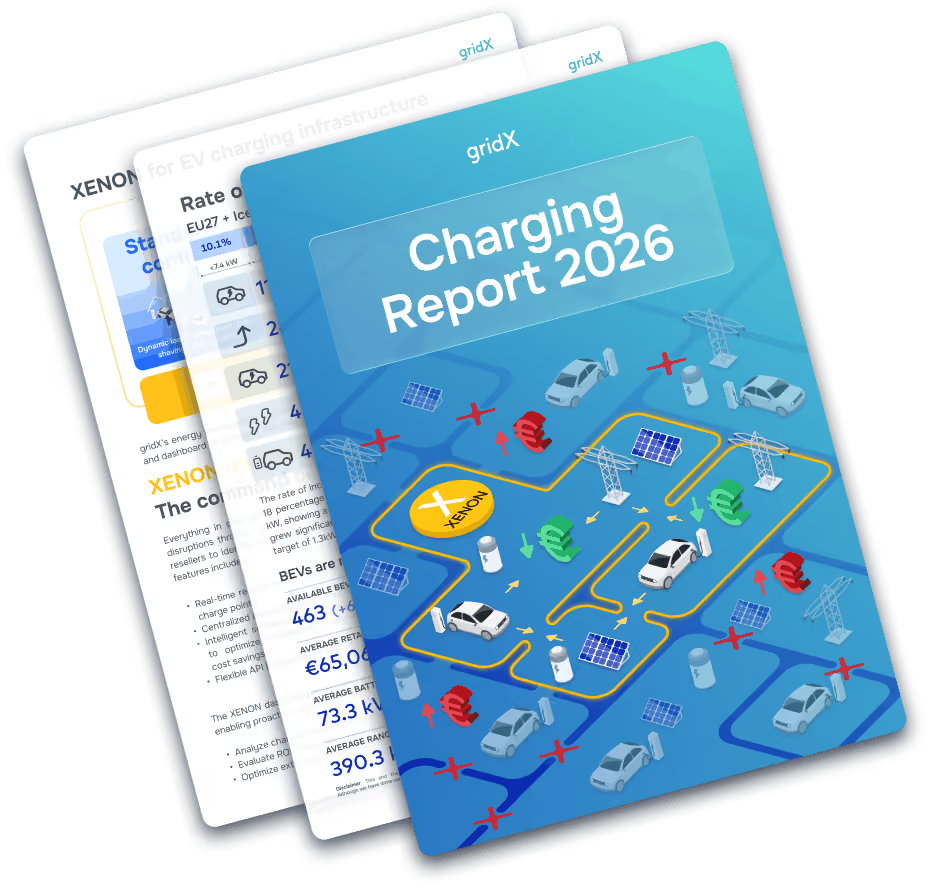
Explore the Europe EV market in 2026. Discover why charging capacity is surging by 36% despite a maturing market, and how grid flexibility is the new priority.