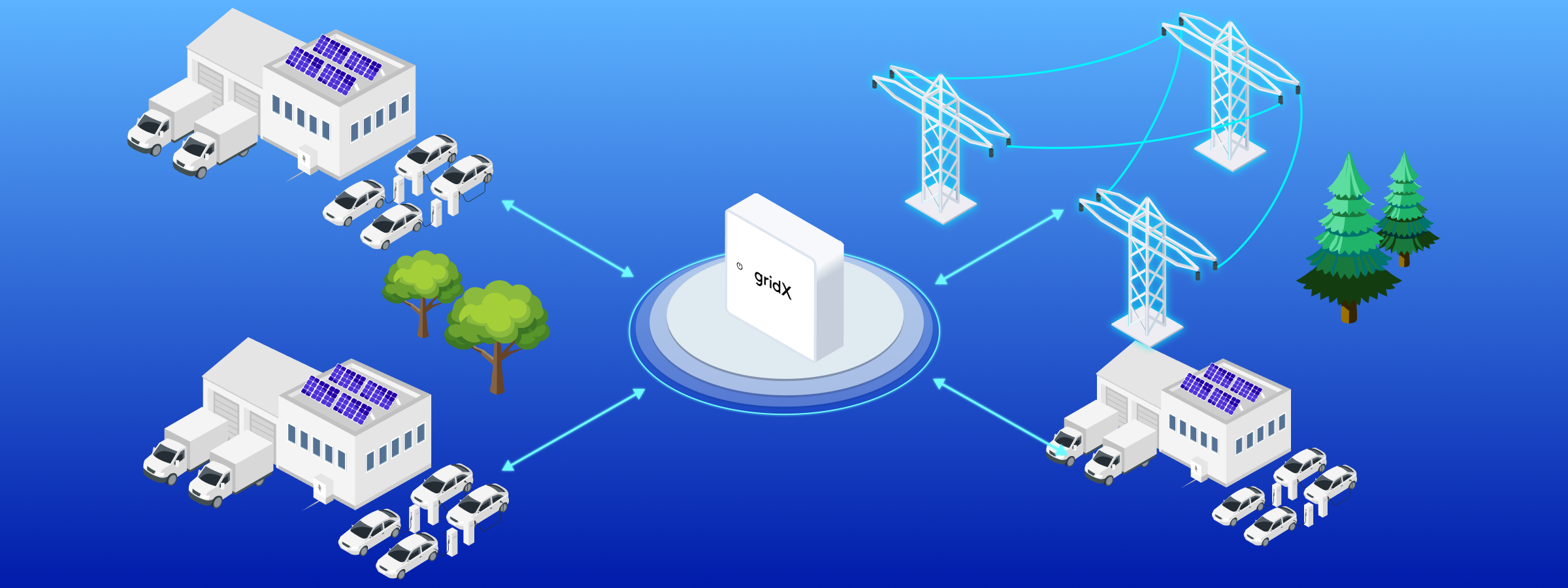
Aachen, December 17, 2025 – Despite volatile market conditions, gridX, Europe’s leading smart energy company, has connected the 200,000th distributed energy resource to its smart energy management platform, XENON. With this, the company has rolled out the highest number of hybrid energy management systems (EMS), consisting of a cloud platform and a local gateway, across 15 European countries. This scaling and the acceleration of the entirely digital (cloud-to-cloud) connection of electric vehicles into XENON supports the company’s new vision of becoming Europe’s leading platform for connectivity and flexibility of decentralized energy assets.
Expanded, scalable implementation of smart energy management
Between August 2024 and November 2025, gridX made a significant leap in growth: the company doubled the number of assets connected to its XENON platform to 200,000 and further increased its share in the European EMS market. This underscores the growing demand for smart energy management in households and at charging stations and gives the company momentum for further scaling in the coming year.
In 2025, gridX secured leading international manufacturers Sungrow, Huawei, and go-e as additional ‘Ready for gridX’ partners and continued to expand its ecosystem. Together with GoodWe, the company launched the plug-and-play feature, which enables simple integration of both new and existing assets (‘retrofitting’). In addition, gridX was a first mover in enabling end customers to control their assets in accordance with Paragraph 9 of the German Renewable Energy Sources Act (EEG). Moreover, the company onboarded, among others, car park operators and energy providers to support their switch to e-mobility.
New vision with a focus on connectivity and flexibility from 2026 onwards
From 2026 onwards, gridX aims to establish itself as Europe’s leading platform for connectivity and flexibility of distributed energy resources. This means XENON is intended to become the preferred digital infrastructure for grid- and market-optimized control of decentralized energy assets.
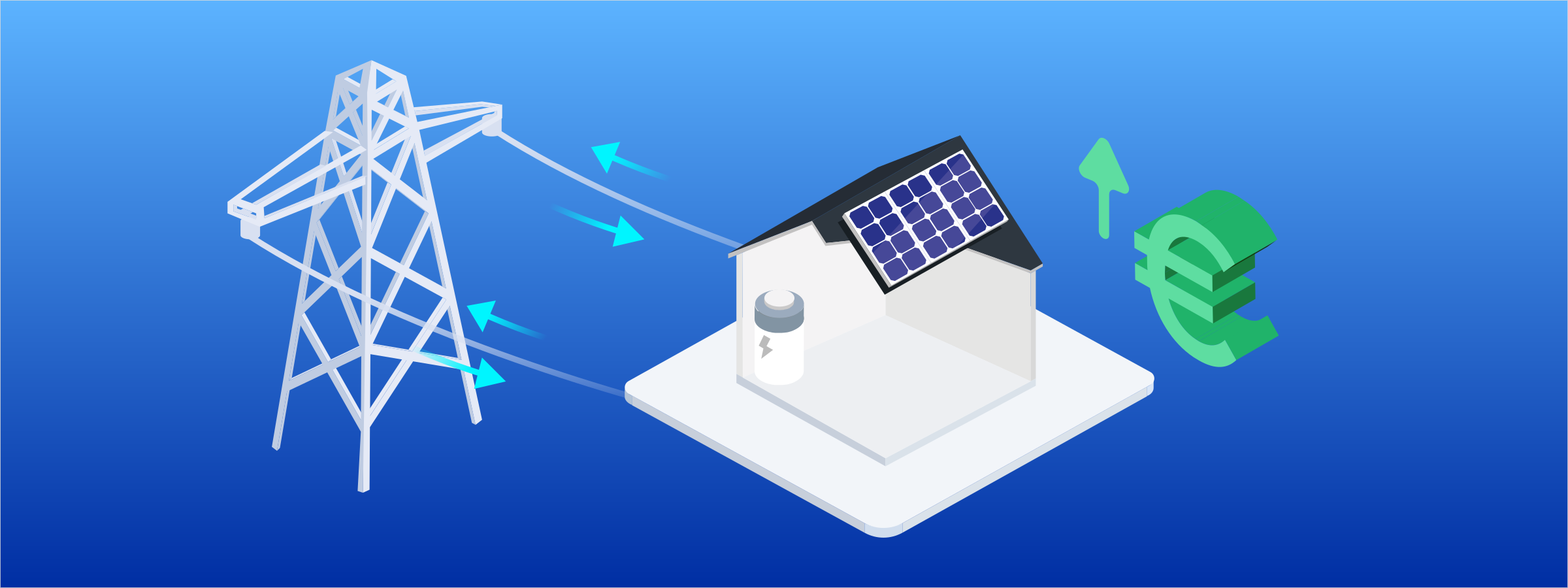
A key aspect of this is cloud-to-cloud connectivity for electric vehicles, whose flexibility can be easily made available for energy trading – allowing both end users and energy providers to earn money. The grid, in turn, benefits from additional stability. In addition, gridX plans to open up its XENON platform to selected business customer groups. This will allow them to link certain solutions of their own, such as local gateways, end user apps, or certain optimization logic, to XENON. In doing so, gridX is addressing the complex challenges of the fragmented EMS market and giving more end users access to technologically advanced energy management.
gridX plans to leverage the various opportunities and advantages of flexibility marketing with the XENON Flex module, which will be rolled out in 2026 following successful testing this year. The company will thus act as an aggregator, enabling energy providers and traders to monetize battery and EV flexibility on intraday or balancing markets in Germany, the Netherlands and the United Kingdom.
Anne Bicking, CEO at gridX, says: “Together with our partners, we are driving forward Europe’s energy and mobility transition. gridX’s product aims to make the growing number of distributed energy resources in Europe digital and flexible so that they can contribute to a resilient, decentralized and sustainable energy system. Our commercial teams are focused on rolling out our solutions across Europe and along the entire value chain so that more people can benefit from advanced energy management that simply works.”
gridX is Europe's leading smart energy company based in Aachen and Munich. With its energy management platform, gridX seamlessly connects, controls and optimizes distributed energy resources in home and at electric vehicle charging sites. Customers can monetize the flexibility of energy assets as gridX aggregates their capacity and makes it available for trading on various energy markets. Energy retailers and scale-ups unlock new revenue streams and provide their end customers with more value and lower bills. Charge point operators can install more and higher power charge points, while lowering costs.