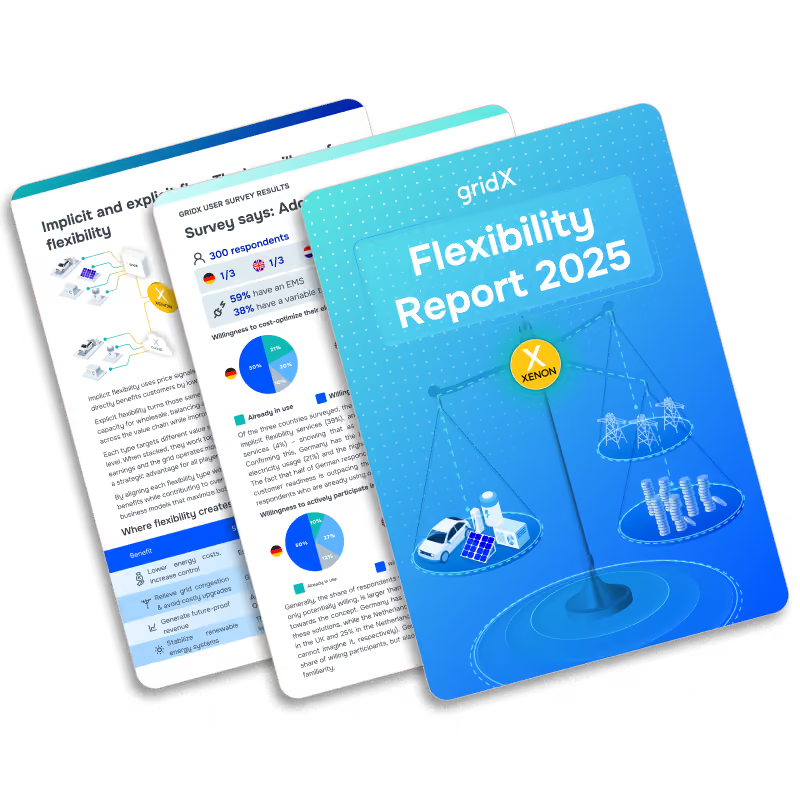
Cloud-to-cloud connectivity within a home energy management system enables EV flexibility and time-of-use optimization without on-site devices. By lowering rollout costs, increasing scale, and simplifying customer acceptance, it turns flexibility trading into measurable financial value. The result is energy cost savings that go beyond pilots and theoretical optimization.
Cloud-to-cloud connectivity allows electric vehicle (EV) charging to respond to energy market price signals – intraday, day-ahead or imbalance markets. When prices move, control signals move with them. That speed determines whether flexibility is captured at the right moment or missed entirely.
This enables market access providers to actively optimize their procurement strategies based on real-time market conditions and price signals. By shifting consumption away from high-price periods and monetizing available flexibility through energy trading, electricity can be procured at lower average costs. Those savings flow through to and reach end consumers in the form of more competitive electricity prices, driven by better timing rather than reduced demand.
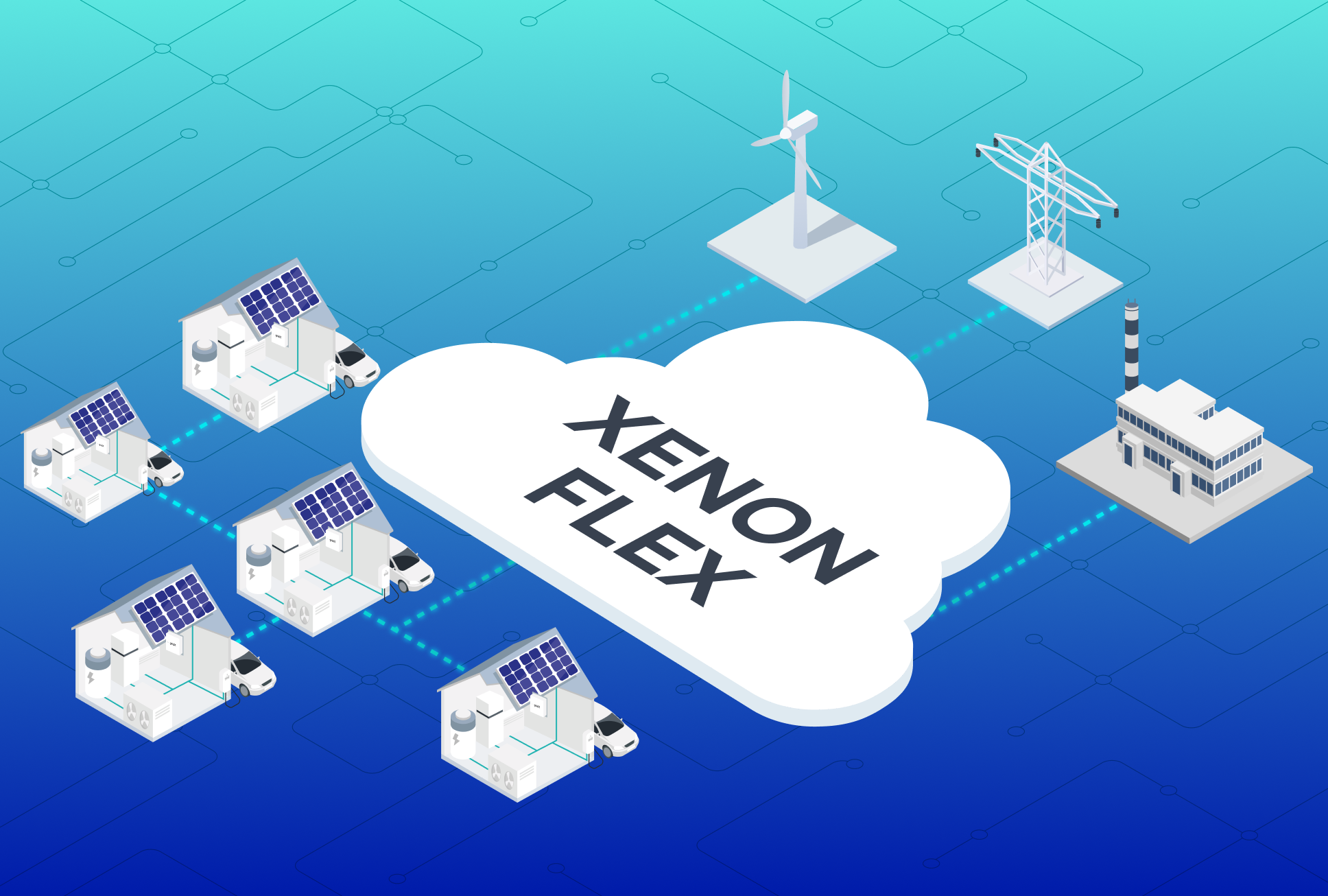
gridX's XENON Flex solution quietly handles the orchestration in the background. It aggregates flexibility, executes control logic and scales optimization without adding physical complexity. The result is not theoretical efficiency but measurable cost reductions that compound over time.
Why cloud-to-cloud connectivity lowers cost and simplifies scale
Cloud-to-hardware connectivity remains essential in many energy setups, particularly for multi-asset homes and retrofits, where existing assets were not designed for direct cloud integration to new devices. In those cases, on-site hardware provides the necessary bridge and enables control where no native cloud interface exists.
“Cloud-to-cloud connectivity can simplify how single-asset optimization products scale. To address the growing mass market for EV charging, our cloud connector capabilities enable our customers to offer compelling, value generating products to the end users which are compatible with their EV brands and models. Cloud-to-cloud has proven to be a viable connectivity to optimize electric vehicles both on a user and fleet-level, maximizing the monetization value of the flexibilities and reducing charging costs,” shares Brian Diaz, gridX’s Senior Strategic Account Manager, who works closely with E.ON Germany and essent to connect electric vehicles in homes via cloud-to-cloud integration at scale.
This advantage shows up in rollout speed and quotas. Without the need for physical installations, cloud-to-cloud setups allow significantly higher rollout volumes in shorter timeframes. New customers and assets can be onboarded in parallel rather than sequentially, without being constrained by installer availability or site access.
Customer acceptance also tends to be simpler. No additional device means no hardware approval process, no space requirements and no changes to existing electrical setups. For many customers, especially at scale, the absence of new on-site equipment reduces friction and shortens decision cycles.
Taken together, these factors make cloud-to-cloud connectivity economically compelling. Lower upfront costs, higher rollout capacity and easier customer adoption create a foundation where optimization and flexibility can be deployed broadly and profitably. Not by replacing cloud-to-hardware, but by complementing it where direct cloud integration is already possible.
What our simulation shows: breaking down the savings
To quantify the impact of different EV charging strategies, gridX combined external benchmarks from BCG with internal Flex simulations, comparing three increasingly flexible unidirectional EV charging use cases. While bidirectional charging savings are based on BCG benchmarks (shown directly in €/year), the unidirectional scenarios reflect gridX’s own Flex simulations, also expressed in €/year.
~€140 per year: Intelligent charging with day-ahead prices
The starting point is an intelligent user charging a unidirectional EV based on day-ahead prices. Charging is shifted to cheaper hours, but decisions are made ahead of time and remain largely static once the day starts. In this setup, the simulated end-consumer value is around €140 per year. This already shows that even basic price awareness can reduce charging costs, but the upside is limited by slow reaction and coarse price signals.
~€400 per year: Intraday optimization via cloud-to-cloud control
The second step introduces explicit flexibility trading on the intraday market. Here, EV charging is actively optimized based on near-real-time price signals rather than fixed schedules. Charging decisions are updated dynamically as prices move throughout the day. In this scenario, the simulated end-consumer value increases to around €400 per year, roughly 2–3× higher than day-ahead optimization alone.
This jump is not driven by higher charging volumes or different assets. It comes from speed and control. By reacting fast enough to intraday price movements, cheaper price windows can be captured more consistently. This is where cloud-to-cloud control shows its strength. It does not depend on perfect forecasts. It depends on being able to act while the opportunity is still available.
%201.png)
~€800 per year: Bidirectional charging and future flexibility
The third step looks ahead to bidirectional charging. When EVs can not only shift consumption but also feed energy back, flexibility increases significantly. In this future scenario, explicit flexibility trading with bidirectional charging increases the simulated end-consumer value to around €800 per year. While this goes beyond today’s widespread deployment, it reinforces the same mechanism: vehicle-to-grid turns EVs into bidirectional assets, increasing controllable flexibility that can be centrally leveraged for greater economic value.
Across all three cases, the pattern is clear. As flexibility increases and control becomes faster and more centralized, value rises sharply. The exact euro amount will vary depending on fleet size, charging behavior and market conditions. What remains consistent is the direction. Market-based optimization only starts to deliver meaningful financial results once control is precise enough to keep up with price dynamics.
That is the role cloud-to-cloud plays in this setup. It does not promise perfect outcomes. It increases the likelihood that flexibility can actually be monetized when it matters.
How cloud-to-cloud savings depend on HEMS execution
According to Irene Guerra Gil, gridX’s Energy Market Expert, cloud-to-cloud savings only materialize when market signals can be translated into precise asset-level action. Faster market access on its own does not create value. The value emerges when that speed is paired with execution logic close enough to the assets to act selectively.
“In flexibility trading, the challenge is rarely identifying a price signal. It is deciding which assets should respond, by how much and for how long. Intraday price spikes are short-lived and uneven. Activating flexibility too broadly or too late reduces the value of the response and can even neutralize it,” Irene added.
This is where XENON Flex comes in. As the flexibility layer on top of our home energy management system, it aggregates EVs and other flexible assets into a single, tradable flexibility pool and, once a market position is taken, disaggregates that flexibility back down to system level. Each EV receives a clear charging or discharging instruction that aligns with market conditions, technical constraints and user behavior. This orchestration layer is what turns cloud-to-cloud connectivity into measurable savings rather than abstract market access.
From a trading perspective, the value of cloud-to-cloud connectivity lies in how easily flexibility can be made available at scale. Without the need for on-site devices, market access providers can onboard more assets faster and with lower upfront cost. This broader participation base gives XENON a larger, more consistent pool of flexibility to work with. Savings are created by broad asset participation and customer acceptance, allowing flexibility to be deployed selectively and economically in response to market conditions.