What is vehicle-to-grid (V2G)?
Vehicle-to-Grid (V2G) is the controlled, bidirectional use of electric vehicle (EV) batteries to support the electricity system. When an EV is plugged into a compatible charger, it can not only charge from the grid but also export electricity back when the system needs it.
V2G requires both a bidirectional-capable vehicle and a compatible charging system (EVCS). The system can only operate while the vehicle is connected, making plug-in time a critical factor for delivering flexibility.
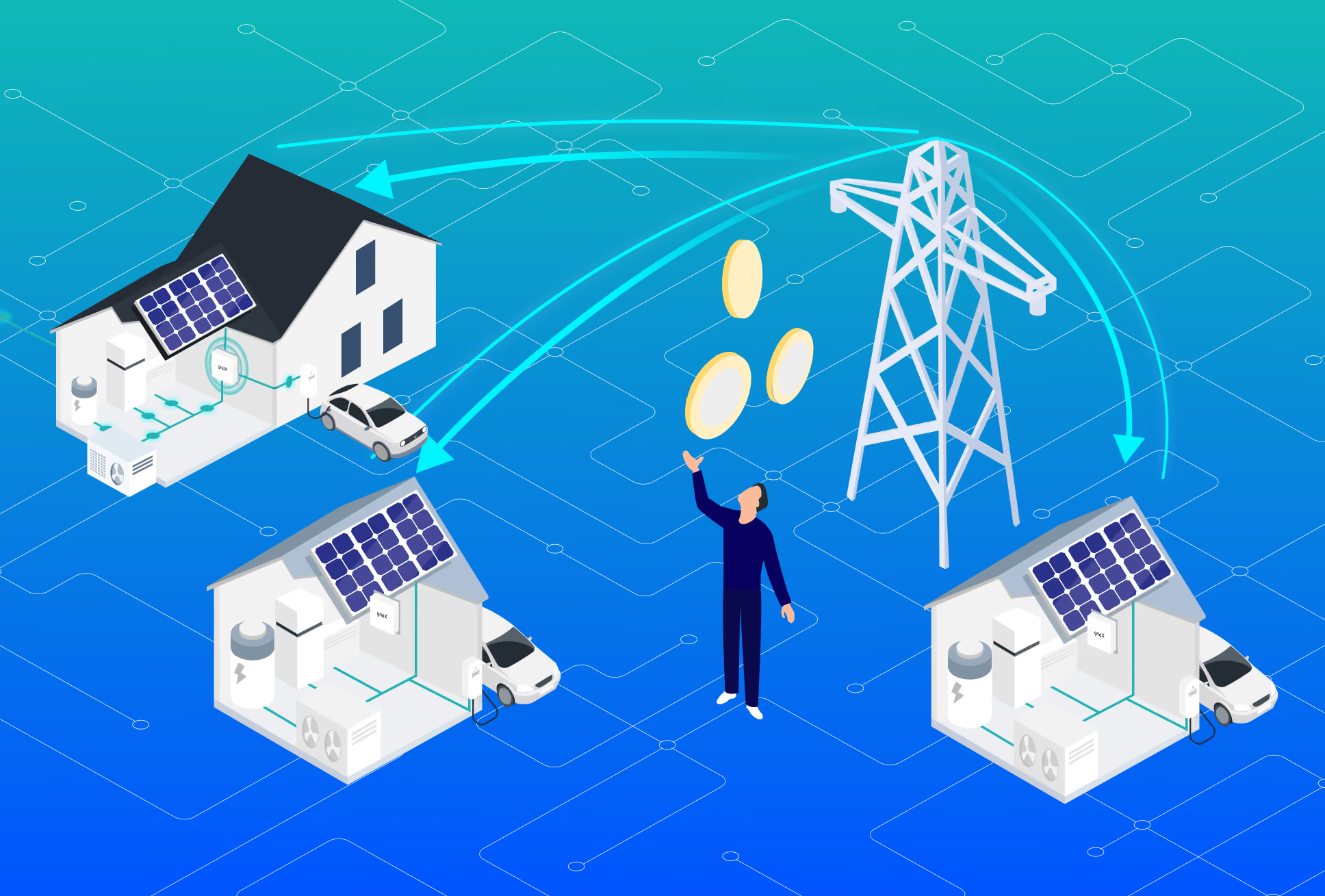
In practice, parked and plugged-in EVs act as distributed energy storage systems, helping stabilize the grid, balance renewable generation, and provide flexibility services. To operate safely and reliably, several systems must coordinate: the vehicle, the charging station, and grid operator signals. This is managed holistically by an energy management system (EMS), which determines when electricity should flow into the vehicle and when it can be returned to the grid, while ensuring the driver retains enough battery for mobility.
At scale, V2G also depends on interoperable communication standards and a settlement model that accurately measures and compensates exported electricity. This coordination turns a plugged-in EV into a flexible energy asset rather than just a consumer of electricity.
Adjacent terms to V2G
A practical glossary of adjacent terms since V2G discussions collapse into acronym soup fast:
V1G (Smart charging)
Unidirectional charging where an EMS shifts charging in time and power to meet constraints or price signals. It is operationally simpler than V2G because it does not require export authorization or discharge scheduling, but it can still deliver significant flexibility.
V2H / V2B
Another important bidirectional application is when the vehicle supplies electricity locally rather than to the public grid.
- Vehicle-to-home (V2H) allows an EV battery to power a household.
- Vehicle-to-building (V2B) does the same for commercial buildings.
In these cases, the goal is typically self-consumption optimization, peak shaving or backup power, rather than providing services to the electricity grid.
V2L (Vehicle-to-load)
Vehicle-to-load allows an EV to power external electrical devices directly, such as tools, appliances or camping equipment. Unlike V2G, V2H or V2B, V2L does not interact with the electricity grid or building energy systems. The vehicle simply acts as a portable power source.
Why V2G matters
The context is electrification at speed. 2,585,187 battery-electric vehicles were sold in Europe in 2025, representing around 17% of all new car sales. That changes the grid problem: EVs are not a marginal new load – they are a structurally growing, time-flexible, battery-backed load that can be steered.
V2G matters because it converts EV adoption from “more demand” into “more controllable capacity”. In Germany, this potential is becoming more tangible following recent amendments to the Energy Industry Act (EnWG), which remove double grid charges for bidirectional charging and enable electricity from storage assets to participate more easily in energy markets.
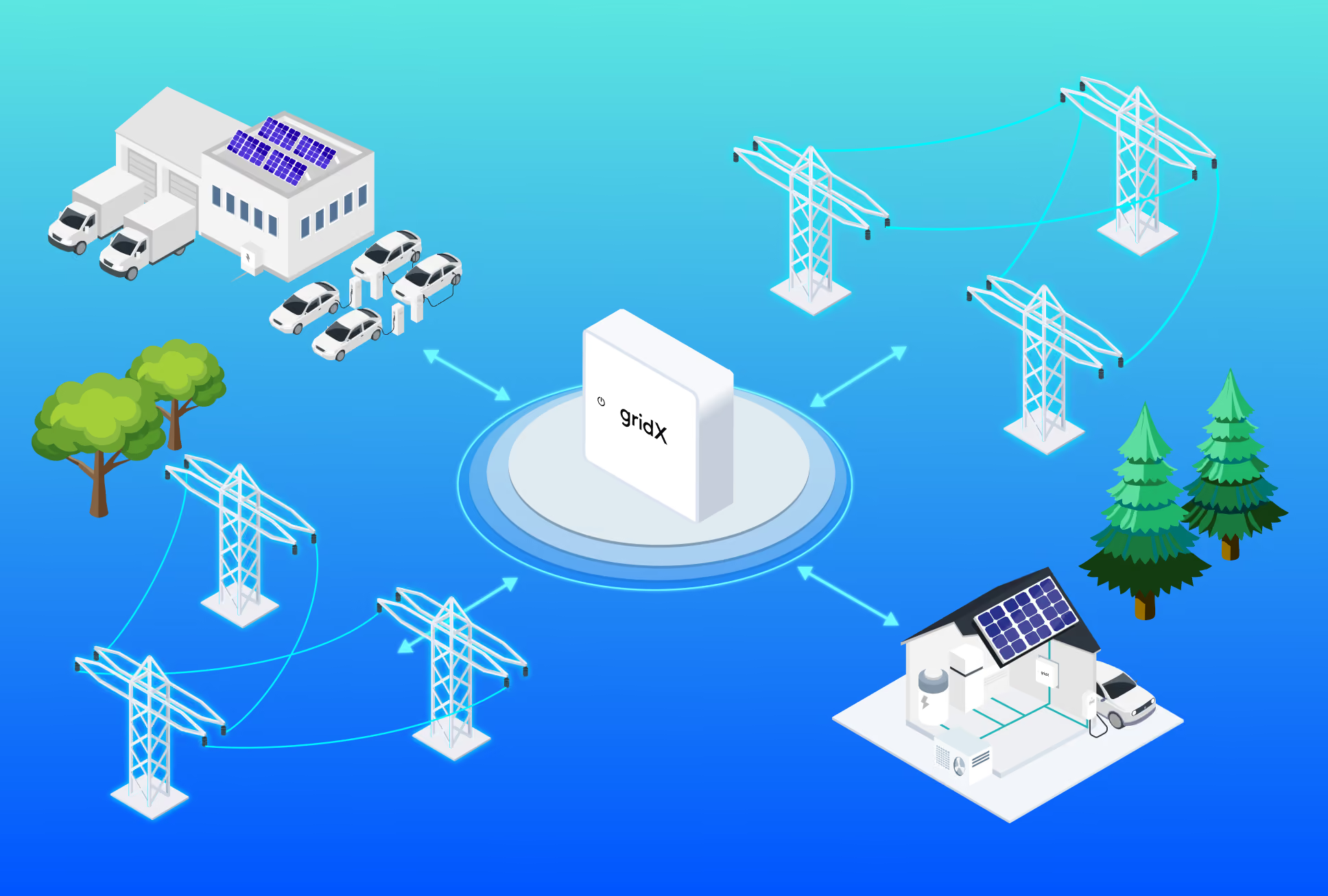
To implement these changes in practice, the German Federal Network Agency introduced MiSpeL (Market Integration of Storage and EV Charging Systems). This framework defines how electricity flowing from storage devices such as EV batteries is measured and settled, ensuring that exported electricity is treated as storage energy rather than being charged grid fees twice.
This regulatory clarification is an important step for V2G, as clear metering and settlement rules are necessary for bidirectional charging to become economically viable.
Industry analysis around these rule changes frames the unlocked potential in power plant terms: with a realistic plug-in rate of 20–30%, EV flexibility could provide roughly 1.0–1.5 GW of flexible power, alongside multi-GWh storage capacity distributed across thousands of vehicles rather than concentrated in a single asset. You do not need to believe every exact number to accept the direction: the controllable EV capacity is now large enough to become system-relevant.
The strongest value pools are not uniform across countries. It depends on how electricity markets reward flexibility, how grid fees are structured and whether consumers have access to dynamic electricity prices. For this reason, V2G is developing country by country across Europe, even within the EU.
For consumers, the key requirement is simplicity. Drivers will only participate if V2G works automatically and does not affect their mobility. Most people will not actively manage charging schedules or electricity exports for small financial gains.
How vehicle-to-grid (V2G) works
V2G operates across four technical layers: power, communications, control and settlement. Weakness in any layer undermines the business case.
Power layer
Two main hardware device architectures enable bidirectional charging.
AC V2G (vehicle-centric conversion): The vehicle’s onboard charger performs the bidirectional power conversion and exports AC electricity back through the charging station. The charger mainly provides switching, protection and communication functions.
DC V2G (charger-centric conversion): Bidirectional conversion takes place in the external DC charger instead of the vehicle. This moves complexity to the charging infrastructure but can simplify vehicle design.
In both architectures, exporting electricity means the EV and charger effectively behave like a small grid-connected generator. They must therefore comply with grid requirements related to protection, voltage and frequency behavior and power quality.
Communications layer
Bidirectional charging relies on two key communication standards.
ISO 15118-20 defines communication between the vehicle and the charger, including message sequences that enable both charging and discharging as well as schedules and power limits.
Modbus and EEBUS are commonly used for local communication between charging stations and energy management systems. These standards transport the necessary discharge commands to enable V2G. It is a prerequisite, however, that charging station manufacturers support the V2G functionality in their Modbus and EEBUS interfaces.
OCPP (Open Charge Point Protocol) governs communication between charging stations and backend systems. This allows operators to manage charging infrastructure, apply control signals and monitor performance at fleet scale, particularly for cloud-to-cloud use cases.
Control layer
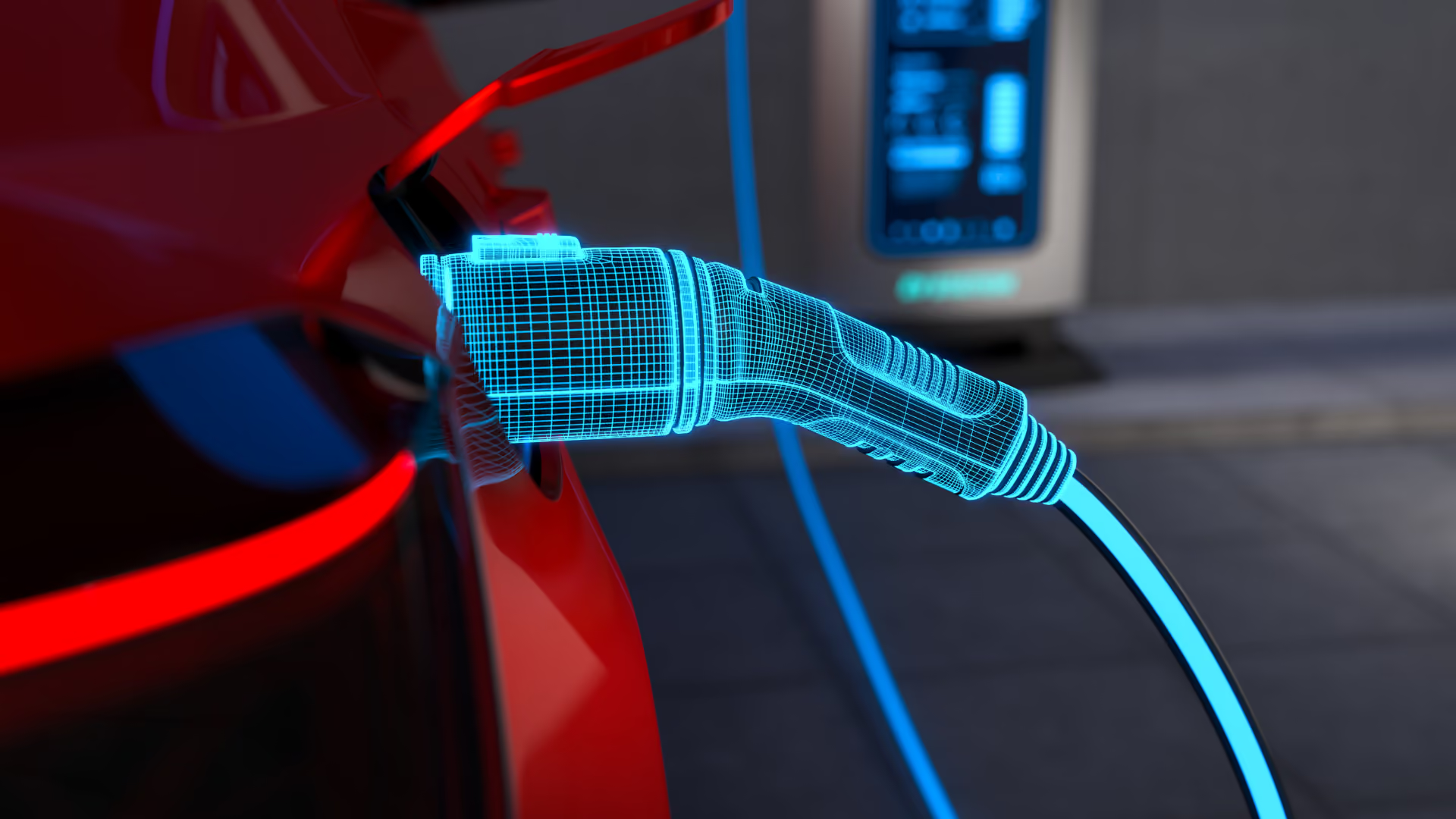
The EMS coordinates the operation of V2G. It continuously balances several constraints:
- Mobility requirements: Ensuring the vehicle is charged for the driver’s next trip
- Grid constraints: Respecting local connection limits or grid operator signals
- Economic signals: Responding to tariffs or flexibility market opportunities
- Battery limits: Avoiding excessive cycling or thermal stress
The EMS may operate as a home energy management system or through a charging network backend. In either case, it coordinates charging and discharging automatically so that flexibility can be delivered without requiring user intervention.
Settlement layer
V2G only works commercially if electricity flows can be measured and billed correctly. Germany’s recent amendments to the Energy Industry Act address this by treating EV export as storage electricity, avoiding double grid charges.
The MiSpeL framework developed by the Bundesnetzagentur defines how electricity flows from storage assets such as EV batteries are metered and settled.
How V2G is monetized
V2G monetization is not a single revenue stream. V2G monetization is based on multiple revenue streams that can be combined, rather than a single source of income. These include avoided costs, such as lower electricity bills or peak charges, as well as revenues from providing flexibility to the grid.
City and fleet V2G
The Netherlands’ Utrecht project is the clearest European example of treating V2G as urban infrastructure: bidirectional shared cars, bidirectional public chargers and explicit grid-stabilization intent. From a business-model viewpoint, this is a public-private “systems play”: mobility operator value plus grid value, with hardware deployed where utilization and plug-in probability are structurally high (shared cars have predictable dwell times).
Retail tariffs and grid fees
Germany provides a clean example of a business-model unlock via regulation. An industry summary argues that removing double grid fees is what makes V2G “economically viable” from 2026. Separately, industry news around BMW and E.ON describes a private-customer V2G tariff planned for March 2026, with an asserted bonus “up to 720 euros per year”. Whether that value holds after real-world constraints is exactly what the market will test.
Flexibility markets and value stacking
V2G monetization often relies on value stacking: combining avoided costs such as peak demand charges or grid connection upgrades with revenues from flexibility markets or grid services. Industry analysis from Eurelectric and EY shows that optimized smart charging and V2G can improve EV total cost of ownership, although the results depend heavily on local tariffs, market access and user behavior.
Germany’s current V2G landscape
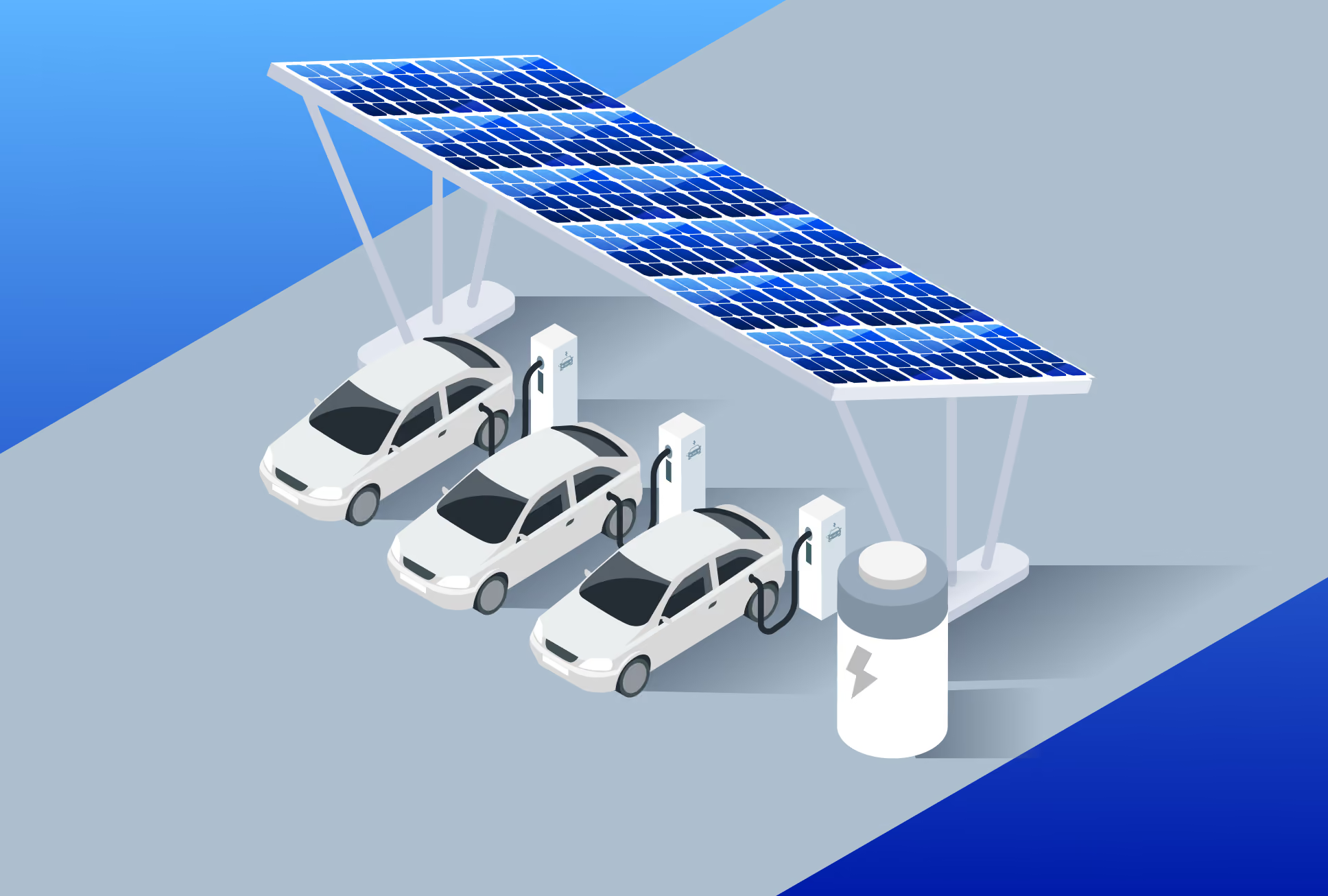
Germany’s progress in vehicle-to-grid is currently driven by recent regulatory changes that make bidirectional charging economically viable.
Amendments to the Energy Industry Act (EnWG), together with the introduction of MiSpeL (§19 EEG), establish the framework for treating electricity from EV batteries as storage energy. This removes double grid charges and defines how bidirectional energy flows are metered and settled, enabling EVs to act as flexibility assets rather than passive loads.
This shift is now being tested in real-world operation through projects such as BDL Next, a BMWE-funded initiative involving partners including E.ON, BMW, TenneT and Bayernwerk Netz. The project equips households with bidirectional vehicles, wallboxes and smart meter gateways to demonstrate how EV flexibility can be integrated into the energy system.
Within this setup, gridX plays a central role. As a white-labeled HEMS provider, gridX connects and coordinates all relevant components – EV, wallbox, PV system, home battery and smart meter gateway – into a single controllable system. It translates market signals from the energy supplier into device-level control while ensuring that user preferences, such as departure times, are respected.
This role is critical because bidirectional charging only creates value when systems work together reliably. gridX addresses this by enabling interoperability, for example through EEBUS, and by ensuring that control signals can be executed consistently across devices and manufacturers while remaining compliant with regulatory requirements.
While these developments show that the technical and regulatory foundations are now in place, large-scale deployment will depend on how consistently vehicles are connected and available, and on the ability to integrate all components into a stable, automated system.
Expert insights and outlook
The next phase of V2G deployment in Europe will depend more on system integration and operational maturity. The core technical components already exist: bidirectional chargers, communication standards and flexible EV batteries. The challenge now lies in connecting these components reliably across the entire energy system.
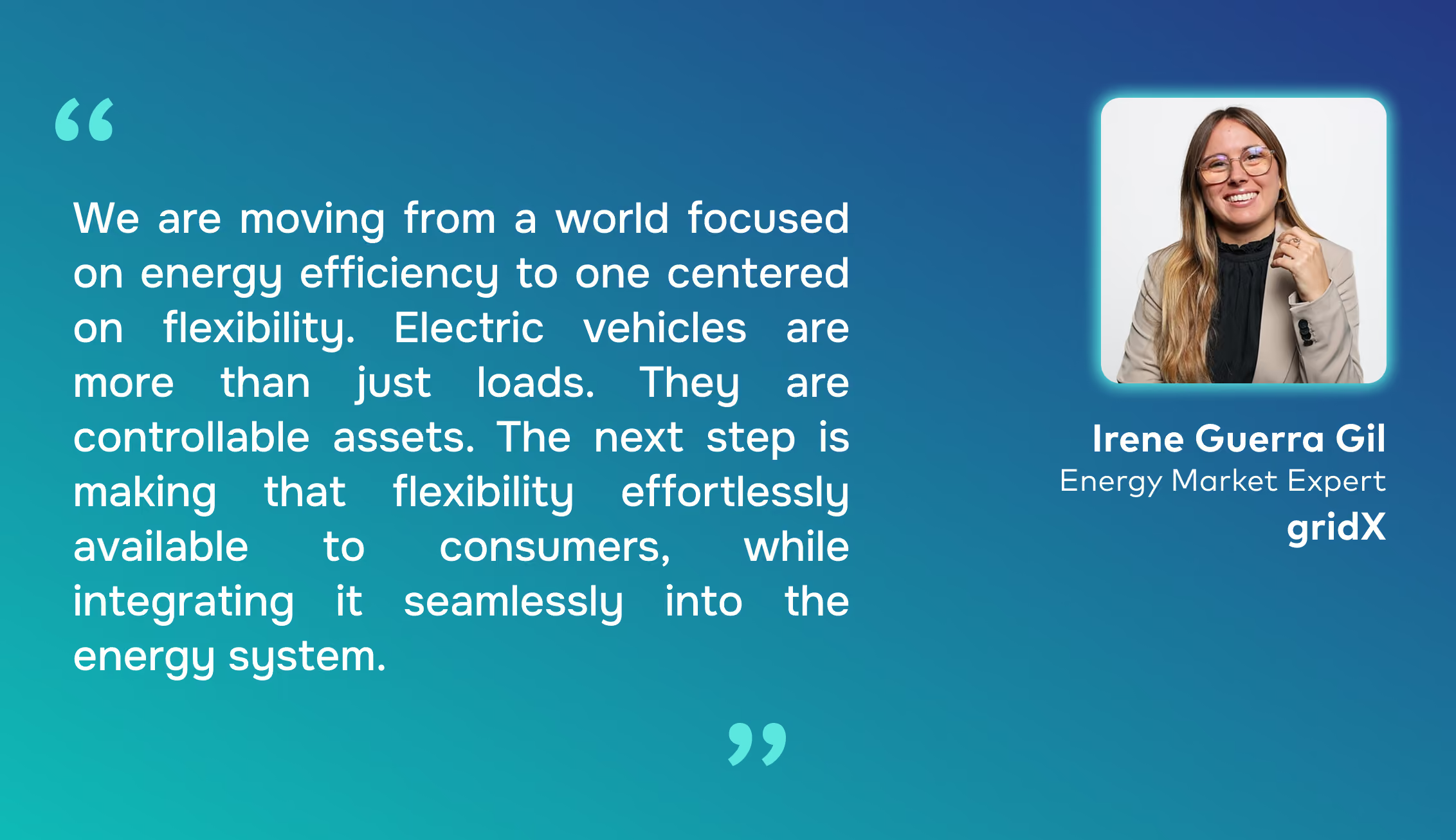
As Irene Guerra Gil explains, “We are moving from a world focused on energy efficiency to one centered on flexibility. Electric vehicles are more than just loads. They are controllable assets. The next step is making that flexibility effortlessly available to consumers, while integrating it seamlessly into the energy system.”
This shift reflects a broader transformation in how electricity systems operate. Rather than relying solely on centralized generation, flexibility increasingly comes from distributed assets such as EVs, heat pumps and home batteries, all of which are increasing year-on-year anyway due to customer demand. Now, their latent flexibility must be tapped into. When coordinated through energy management systems, these resources can provide grid services while still meeting household energy needs. While regulation and consumer preferences in different markets are showing different pathways to scale, the technology behind it remains consistent.
According to Philip Grant, Electric Vehicle Charging Infrastructure (EVCI) Product Manager at gridX, the long-term impact of V2G will depend on how well the systems are orchestrated.
“V2G will not scale as a standalone charger feature. It becomes valuable when the EV is seamlessly integrated in the broader energy system. Coordinated with the home, the grid and electricity markets through intelligent energy management,” he added.
In practical terms, this means that energy management systems will play a central role in enabling and rolling out V2G. Instead of treating bidirectional charging as a separate technology, EMS platforms integrate EV flexibility with other distributed energy resources and optimize them collectively.
As EV adoption and charging infrastructure continue to grow, this orchestration challenge will become increasingly important. Energy systems will need to manage millions of distributed batteries while maintaining reliability, security and user convenience. The success of V2G will therefore depend not only on hardware, but also on the software and market frameworks that coordinate these resources at scale.